Are you feeling overwhelmed and struggling to cope with the demands of daily life? You’re not alone. In today’s fast-paced world, it’s easy to get caught up in the hustle and bustle and forget to take care of one of the most important things: your well-being.
Learning effective stress management techniques can be a game-changer. By adopting simple yet powerful strategies, you can reduce feelings of anxiety and improve your overall quality of life. As a beginner, it’s essential to start with the basics and build your way up.
By exploring the world of stress management, you’ll discover a range of practical techniques to help you navigate life’s challenges with confidence.
Key Takeaways
- Understand the importance of stress management for overall well-being
- Learn simple and effective techniques to reduce anxiety
- Discover practical strategies to improve daily life
- Build confidence in managing stress as a beginner
- Explore a range of techniques to suit individual needs
Understanding Stress and Its Impact
Understanding stress is crucial for maintaining both physical and mental health. Stress is a natural response to demands or pressures, but chronic stress can have severe implications on our well-being.
What Happens to Your Body During Stress
When we experience stress, our body’s “fight or flight” response is triggered, releasing hormones like cortisol and adrenaline. This can lead to increased heart rate, blood pressure, and energy levels. While this response is meant to be temporary, chronic stress can keep the body in this state for extended periods, leading to wear and tear on various bodily systems.
The Long-term Effects of Chronic Stress
Chronic stress can have far-reaching consequences, including an increased risk of anxiety, depression, cardiovascular disease, and a weakened immune system. Effective stress relief tips and coping with stress mechanisms are crucial for mitigating these effects.
| Physical Effects | Mental Effects |
|---|---|
| Increased blood pressure | Anxiety |
| Cardiovascular disease | Depression |
| Weakened immune system | Mood swings |
As
“The greatest weapon against stress is our ability to choose one thought over another.”
Understanding and managing stress is key to maintaining overall health.
Essential Stress Management Techniques for Beginners
The journey to effective stress management begins with simple, accessible techniques that can be easily integrated into daily life. For beginners, understanding the basics of stress reduction is crucial.

Quick Relief Techniques for Immediate Stress
When stress strikes, quick relief techniques can be lifesavers. Deep breathing exercises are among the simplest and most effective methods. By focusing on slow, deliberate breaths, individuals can calm their nervous system and reduce immediate feelings of stress.
- Progressive muscle relaxation
- Mindful meditation for a few minutes
- A short walk outside
These techniques can be practiced anywhere, making them ideal for managing stress at work or on the go.
Developing a Sustainable Stress Management Routine
While quick relief techniques are helpful, developing a sustainable stress management routine is key to long-term well-being. This involves incorporating activities that promote relaxation and stress reduction into your daily schedule.
“You can’t start the next chapter of your life if you keep re-reading the last one.”
Regular exercise, adequate sleep, and healthy eating habits form the foundation of a stress-resilient lifestyle. Additionally, setting aside time for hobbies and relaxation can significantly reduce overall stress levels.
| Activity | Frequency | Benefits |
|---|---|---|
| Exercise | Daily | Reduces stress hormones, improves mood |
| Meditation | Weekly | Enhances mindfulness, reduces anxiety |
| Hobbies | Daily | Provides distraction, promotes relaxation |
How to Identify Your Personal Stress Triggers
Understanding personal stress triggers is essential for effective stress management. Triggers can be emotional, physical, or environmental. Keeping a stress journal can help identify patterns and triggers.
By becoming more aware of the situations, emotions, or events that cause stress, individuals can develop targeted strategies to mitigate their impact.
Effective stress management is a personal and ongoing process. By combining quick relief techniques, sustainable routines, and awareness of personal stress triggers, beginners can significantly improve their ability to manage stress.
Mindfulness and Meditation Practices
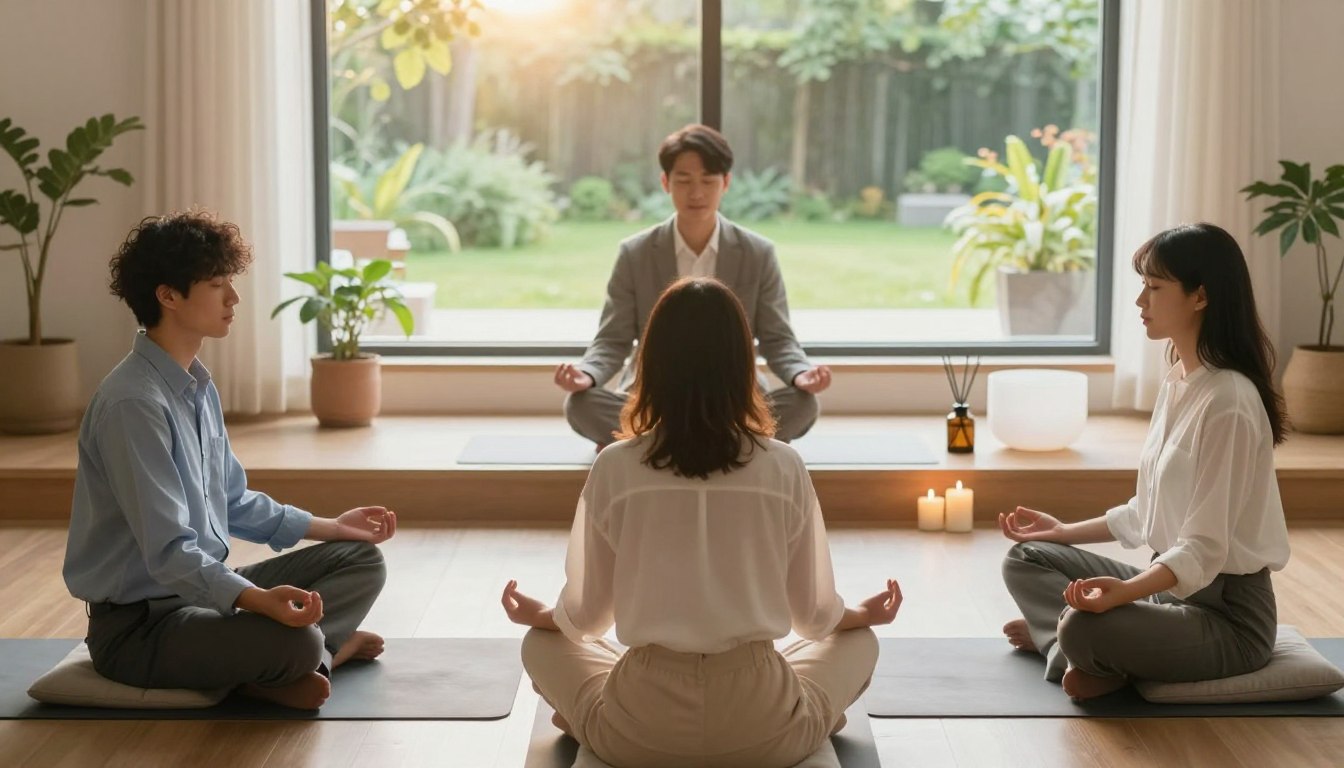
Mindfulness and meditation practices offer a powerful toolkit for managing stress and enhancing overall well-being. By incorporating these practices into your daily routine, you can cultivate a greater sense of calm and resilience.
Getting Started with Basic Meditation
To begin with basic meditation, find a quiet and comfortable space where you can sit without distractions. Close your eyes and take slow, deep breaths, focusing on the sensation of the breath moving in and out of your body. Start with short sessions, such as 5-10 minutes, and gradually increase the duration as you become more comfortable with the practice.
Tips for Effective Meditation:
- Be consistent with your practice.
- Use guided meditations if you’re unsure where to start.
- Gently bring your focus back to your breath when your mind wanders.
Mindful Breathing Exercises
Mindful breathing exercises are a simple yet effective way to reduce stress. Focus on your breath, observing its pattern without trying to change it. When your mind wanders, gently bring your attention back to your breathing.
Try this simple exercise: Inhale for a count of four, hold your breath for a count of four, and exhale for a count of four. Repeat this cycle several times.
Body Scan Technique for Stress Reduction
The body scan technique involves lying down or sitting comfortably and bringing your attention to different parts of your body, starting from your toes and moving up to your head. Notice any areas of tension or discomfort without judgment.
This practice helps in releasing physical tension and promoting relaxation.
Guided Imagery and Visualization
Guided imagery and visualization involve using your imagination to create a peaceful and relaxing scene. Imagine yourself in a safe, enjoyable place, engaging all your senses in the experience.
Benefits of Guided Imagery:
| Benefit | Description |
|---|---|
| Reduces Stress | Helps in calming the mind and body. |
| Improves Focus | Enhances concentration and mental clarity. |
| Promotes Relaxation | Encourages a state of deep relaxation. |
By incorporating these mindfulness and meditation practices into your daily life, you can develop a more effective stress management routine and improve your overall well-being.
Physical Activities and Relaxation Exercises for Stress Relief
Engaging in physical activities and relaxation exercises is a powerful way to combat stress and improve overall well-being. Regular physical activity not only reduces stress but also improves mood, enhances sleep quality, and increases energy levels. By incorporating simple exercises and relaxation techniques into your daily routine, you can effectively manage stress and promote a healthier lifestyle.

The Connection Between Exercise and Stress Reduction
Exercise has a direct impact on stress reduction by releasing endorphins, also known as “feel-good” hormones. These natural chemicals help alleviate symptoms of anxiety and depression, promoting a sense of calm and well-being. Regular physical activity also improves resilience to stress, enabling individuals to better cope with challenging situations.
Beginner-Friendly Exercises to Combat Stress
For those new to exercise, there are several beginner-friendly options that can help reduce stress. Brisk walking, jogging, and yoga are excellent choices, as they combine physical movement with elements of mindfulness and relaxation. These activities can be adapted to suit different fitness levels and can be done at home or in a local park.
- Brisk walking: A simple and accessible form of exercise that can be done almost anywhere.
- Yoga: Combines physical postures, breathing techniques, and meditation to reduce stress.
- Jogging: An effective way to release endorphins and improve cardiovascular health.
Progressive Muscle Relaxation Technique
The Progressive Muscle Relaxation (PMR) technique involves systematically tensing and relaxing different muscle groups to release physical tension. By practicing PMR, individuals can reduce muscle strain, promote relaxation, and improve overall well-being. This technique is particularly useful for those experiencing physical symptoms of stress, such as muscle tightness or pain.
“Relaxation is not just a state of being, it’s a skill that can be developed with practice.” – Anonymous
Deep Breathing and Stretching Routines
Deep breathing exercises and stretching routines are simple yet effective ways to reduce stress and promote relaxation. By focusing on slow, deliberate breaths and gentle stretches, individuals can calm the mind and soothe the body. These practices can be easily incorporated into daily routines, providing a quick and effective way to manage stress.
Incorporating Movement into Your Daily Routine
Incorporating physical activity into your daily routine doesn’t have to be daunting. Simple changes, such as taking the stairs instead of the elevator or going for a short walk during breaks, can make a significant difference. By finding enjoyable activities and scheduling them into your day, you can maintain a consistent level of physical activity and reduce stress.
By combining physical activities with relaxation exercises, individuals can develop a comprehensive stress management plan that promotes overall well-being. Whether it’s through exercise, deep breathing, or progressive muscle relaxation, there are numerous ways to combat stress and improve mental health.
Creating a Stress-Free Environment at Home and Work
Creating an environment that fosters relaxation and productivity is key to managing stress. Your surroundings, whether at home or in the workplace, significantly impact your mental and emotional well-being.
Organizing Your Space for Peace of Mind
Organizing your living and working spaces can greatly reduce stress. Cluttered environments can lead to feelings of overwhelm and anxiety. Start by decluttering and organizing your space, implementing storage solutions, and establishing routines for maintaining tidiness.
For instance, a tidy workspace can improve focus and productivity, while a clutter-free home can promote relaxation. Consider adopting minimalistic approaches to decor and organization to enhance the sense of calm.
Setting Boundaries to Reduce Stress
Setting clear boundaries is essential for managing stress. This includes learning to say “no” to non-essential tasks, setting realistic goals, and establishing healthy limits with others.
Effective boundary setting can help prevent burnout and reduce feelings of overwhelm. It’s about prioritizing your needs and being mindful of your limits.
| Boundary Type | Description | Benefits |
|---|---|---|
| Work-Life Balance | Separating work from personal life | Reduces burnout, increases personal time |
| Social Boundaries | Limiting social engagements | Prevents overcommitment, enhances personal space |
| Digital Boundaries | Limiting screen time and notifications | Reduces digital overwhelm, improves sleep |
Digital Detox Strategies
In today’s digital age, managing screen time and digital notifications is crucial for stress reduction. Implementing digital detox strategies, such as turning off notifications during meals or before bed, can significantly reduce stress.
Consider scheduling digital-free times or days to disconnect and recharge. Utilizing apps or features that track and limit screen time can also be beneficial.
Conclusion: Building Your Personalized Stress Management Plan
Now that you’ve explored various stress management techniques for beginners, it’s time to create a personalized plan that suits your lifestyle. Start by identifying your personal stress triggers, as discussed earlier, and choose the techniques that work best for you.
Begin with simple practices like mindful breathing exercises or progressive muscle relaxation. As you become more comfortable, you can incorporate physical activities and relaxation exercises into your daily routine. Remember, the key is to start small and be consistent.
By combining these stress management techniques for beginners, you’ll be better equipped to handle stress and improve your overall well-being. Take the first step today and start building a stress-free life.
Leave a Reply